This past week I've been in Addis Ababa, Ethiopia attending the Callaloo Conference on literature and culture entitled “Black Movements: Poetics and Praxis.” Like every time I travel to the African continent, I have been consciously and deliberately in search of Haiti. This being my first trip to East Africa, I have been particularly intrigued to uncover similarities and differences with Haiti as compared to in West Africa, where the links are far more historically and culturally rooted as a result of the transatlantic slave trade. Although both Haiti and Ethiopia inhabit important roles in the African and African diasporic imaginary in terms of their relationships to liberation and freedom from colonialism and imperialism (Ethiopia as the only country in Africa to have never been colonized and Haiti as the first country to successfully overthrow slavery) the connections between the two countries are far more tenuous.
Would I find in Addis Ababa as I had in Accra enthusiastic recognition and celebration of the Haitian Revolution and its ubiquitous leaders? Would I be able to locate, as I had in Dakar, a few Haitian writer left remaining from what had once been a vibrant community of Haitian writers living in exile that included Jean Brierre, Roger Dorsinville, and the recently deceased Lucien Lemoine? Would the Ethiopians want to claim me as their sister or cousin like the Beninois I had encountered in Paris and other places? Would they, like my friends and colleagues from Benin, remind me that Benin is ancient Dahomey where many of our Haitian ancestors had come from? Might I happen upon, in this African city known for its international presence that has designated it as the seat of the African Union, any Haitians?
Thus far the answer to all of these questions has been a resounding no. It has been interesting to watch some of my Trinidadian and Jamaican colleagues find links and affirmation of their own cultural identities. One professor from Trinidad travelled to Shashemane a few hours south of Addis Ababa in order to visit the community of Rastafarians to whom Ethiopian emperor Haile Selassie had dedicated lands that have been settled by Rastas for many years now. Listening to her stories about drinking sorrel in East Africa surrounded by people who so reminded her of home, I wondered what the Haitian equivalent of that experience would look like for me. Another colleague was constantly mistaken for Ethiopian, and we discussed how for her this recognition made the entire city feel familiar and welcoming.
For me, that familiarity was for the most part visual. The roads, the signs, the landscape, the pace of urban life... At times, the tastes were also faintly familiar, the savory and spicy sauces and well cooked meats. On my first day in Ethiopia, I was reminded that I preferred to taste these sauces with rice when I looked down at my plate and noticed that two huge pieces of njera remained although all the other food was gone. Of course, there were the animals as well-- I saw goats walking down the streets, dogs that looked unclaimed as they roamed about, and a panoply of colorful birds. But it ended there. Since July is winter in Ethiopia, it was actually quite cold during my entire stay, making it difficult for me to associate the climate with Haiti. I remember descending the plane in Dakar and smelling the air for the first time, inhaling the familiar smell of the tropical air that is known only to those who have smelled it. In Ethiopia I shivered as soon as I walked out of the airport…and every day I kicked myself for not having dressed more warmly.
But none of this surprised me, mostly because of how aware I am that Ethiopia and Haiti have virtually no ties. Since one of the heavily discussed topics at the conference was Pan-Africanism, Haiti did come up in the panels as well as in discussions that I had with various colleagues. As someone whose work involves comparative literatures and cultures, I often look for the continuities in literatures, cultures, languages and texts across Africa and its diaspora. This trip has made me realize that despite my own admonishments to always account for the heterogeneity of African and African diaspora studies, I may not have fully considered just how facile our desires to link these countries may sometimes be. My underlying desire to find Haiti in Ethiopia despite my awareness that there was perhaps no reason (such as shared language, historic origin, religion, etc) for this to be so, has made me think more concretely about what we talk about when we talk about Africa in relation to Haiti. Haiti is, in many ways one of the "most African" islands of the Caribbean especially when we consider the literary legacy of Jean Price Mars' Ainsi parla l'oncle and those who followed him. The literary, cultural, religious and even linguistic links to Africa are of course undeniable, but they are also very specific.
Speaking to people I met during my short stay, I learned that Haile Selassie may have traveled to Haiti during his reign, but there was no additional information about this trip such as the year or the occasion, etc. Unfortunately, I didn't have time to look into this further and wonder if there might be archival data for me to locate in Port-au-Prince or in Addis Ababa on the topic. If anything the possibility made the point that, from a comparative perspective there is more research to be done about Haiti's connection to different countries both on the African continent and around the world, in many different fields.
RMJC
lundi 12 juillet 2010

lundi 21 juin 2010
Pour enseigner Le Sari Vert

Pourquoi? Il y a le fait que ce roman ne rentre pas dans le cadre de mes cours actuels, mais je pourrai toujours modifier ou changer un cours. Mais où trouver le livre pour les étudiants ? S'il m'est possible d'avoir des livres récemment publiés en dehors d’Haïti par le biais des parents ou des amis qui voyagent, si je peux même me permettre d’acheter quelques livres étrangers en ligne ou en librairie chaque année, tel n'est pas le cas pour mes étudiants. Et ceci depuis bien avant le séisme du 12 janvier. Chaque semestre, en faisant mon plan de cours, je passe une matinée à la bibliothèque de l’ENS à recenser les ouvrages disponibles pour les cours que je dispense. J’essaie le plus que possible de bâtir mes cours autour de ces ouvrages. Sinon la majorité des étudiants ne liront pas les textes étudiés. Or, Le Sari Vert ne se trouvait pas à la bibliothèque. Reste toujours l’option des photocopies, mais pour des romans, ça fait long, en dehors de toutes les considérations sur le photocopiage. Avec des initiatives de rapatriement littéraire comme celle des Editions des Presses Nationales d’Haïti et plus récemment celle des Ateliers de Jeudi Soir, des textes d'auteurs haïtiens publiés à l’étranger peuvent maintenant être disponibles en Haïti à des prix plus ou moins abordables. Des collègues maghrébins me disent qu’un système similaire est disponible dans certains pays d’Afrique. Ces initiatives sont certes louables, mais ne facilitent pas la lecture encore moins l’étude des textes mauriciens par des Haïtiens ou des textes haïtiens par des Algériens, par exemple. On pourrait se dire que la littérature francophone en sa totalité n’est vraiment accessible qu’aux francophones des pays riches. Et si tel est le cas, comment enseigner les littératures de langue française dans des pays francophones où les populations ont un faible revenu économique ? La situation est encore plus critique ici depuis le tremblement de terre qui a ravagé tant d’institutions supérieures dans le pays.
Le facteur du pouvoir d'achat peut expliquer en partie la grande importance des études francophones aux Etats-Unis et leur moindre importance en Haïti, par exemple.Or, les étudiants haïtiens ont eux aussi besoin de lire des textes mauriciens, sénégalais et marocains. Il n’est pas normal que les références littéraires des étudiants haïtiens se limitent aux seuls auteurs haïtiens et français avec quelques très rares exceptions. Il faut en finir avec la dynamique d'une litterature originelle et une autre qui en serait dérivée. Malheureusement, c'est en ces termes que de nombreux lecteurs perçoivent les littératures française et haïtienne. J’ai appris d’un professeur de l’Ile Maurice que les littératures francophones sont enseignées à l’Université de Maurice en cours de littérature comparée avec la littérature mauricienne. Ainsi les oeuvres des auteurs haïtiens tels Emile Ollivier, René Depestre et Marie-Célie Agnant sont enseignées à côté de celles des auteurs mauriciens comme Ananda Devi. J'aimerais bien trouver les moyens d'offrir un cours pareil aux étudiants de premier cycle de l'ENS. Je crois que je viens de me donner un nouveau projet!
NM
mardi 8 juin 2010
In Search of (Grass)Roots

Yet untold numbers of grassroots organizations are also at work in Haiti, some that were created long before and some that have sprung up since, organizing locally since the earthquake. Mainstream media sources in the United States have rarely mentioned this type of local organizing initiated by activists and every day Haitians. Despite this inattention that we find in conventional news sources, there are many examples of people organizing as individuals and in groups and using their networks to do so. I am devoting this post to looking at a few of these in the hopes that people will follow the work that they are doing and look for more information about the different types of organizing taking place on the ground.
As an organization that addresses the issue of violence, KOFAVIV the Commission of Women Victims for Victims, is a coalition of survivors of different forms of violence who have joined together to advocate for victims of violence and affect change by educating and preventing future violence. The group, which lost about 300 members in the earthquake continues to organize out of dire necessity. Members have taken the protection of women and girls in the tents into their own hands, setting up watch in the night or accompanying people on their way to the latrines. This type of intervention has become necessary due to the lack of protective measures and the ineffective procedures offered by the police and MINUSTAH. Today Malya Villard-Appollon, a member of KOFAVIV, will testify before the United Nations Human Rights Council in Geneva along with lawyers from MADRE and the Institute for Justice and Democracy in Haiti. As she herself has stated, Villard-Appollon heads to Geneva with the following goals: “We want to tell the Human Rights Council that the systems for protecting women in the camps are broken. We get no protection from the police, or the peacekeepers. We feel we do not have access to the rooms where decisions about our safety are made. We need the support and commitment of the international community.”
Papaye Peasant Movement (MPP), based in the Central Plateau, is a peasant movement for a sustainable economy and participatory democracy. Since the earthquake MPP has been instrumental is responding to the vast numbers of people leaving Port-au-Prince to resettle in more rural areas. Among the efforts they have taken on since the earthquake, there is the provision of food for people in the hospital in Hinche as well as the provision of food to assist peasant families taking in survivors, and the creation of a shelter to be run out of the Papaye training Center. Because MPP has a long history of grassroots organizing they have been well positioned to respond to the new needs coming out of the earthquake.
Many of these groups have a history of local organizing that precedes January 12, 2010, while others have been formed in response to post-earthquake needs. Biwo Doleans Sosyal was started by the staff of Bibliothèque Soleil in Carrefour-Feuilles. Bibliothèque Soleil is a community library that was started by Haitian author Pierre Clitandre and his daughter Nadège Clitandre, in order to empower and invest in the youth of Carrefour-Feuilles. The purpose of Biwo Doleans Sosyal, which emerged as an outgrowth of Biblotheque Soleil, is to offer emotional support to those in the Carrefour-Feuilles area who lost loved ones in the earthquake, as well as provide them with other types of assistance. Most notably, this Biwo Doleans has initiated a documentation plan, creating oral histories by documenting the stories of what people were doing as the earthquake happened and what they have been doing in the aftermath. This important step demonstrates how solidarity can translate into the creation of history.
Similarly, the students of the Ciné Lekol in Jacmel, have also turned to history making—using their training to document the footage of the quake as well as the stories of people affected by it. The Cine Institute Recovery and Reportage Blog is devoted to using visual imagery and cinema to document the devastation from the earthquake as well as the reconstruction process. The work of Ciné Institute highlights the role of art as a form of advocacy and memory preservation. Through the use of film, the Institute has gone from being a center for education to becoming a movement for educating others in the aftermath of the earthquake.
Another group of women that have joined together in Port-au-Prince to create change is Plateforme des femmes citoyennes, a coalition of women’s organizations whose goal is to lobby for the inclusion of women’s needs in the rebuilding process. The coalition carries on intentionally in the spirit of the work begun by Myriam Merlet, Anne-Marie Coriolan, and Magali Marcelin three Haitian feminist leaders who perished in the earthquake. This group is a reminder of how devastating loss can transform into new opportunity. By harnessing the energy of those committed to honoring the legacy of what was lost, Plateforme des femmes citoyennes is a reminder that women’s movements did not end with the earthquake.
There have also been transnational efforts likewise centered around women such as Poto Fanm + Fi , a global solidarity initiative made up of women’s rights advocates from Haiti and in the diaspora in order to “to support the needs, voices, and leadership of Haitian women and girls, and grassroots organizations in Rebuilding Haiti.” Poto Fanm was responsible for creating a “Gender Shadow Report” of the official PDNA in order to account for some of the gaps concerning women and girls and to offer solutions for how to account for their future needs in the reconstruction process as well as to advocate for women’s leadership and incorporation.
The grassroots nature of Haitian activism goes as far back as the Revolution (1791-1804) when slaves organized themselves to topple slavery and begin a nation from the bottom up. In many ways grassroots are an integral part of our Haitian roots. The wide-ranging responses by both established and newly formed organizations demonstrates Haitians' ability and constant commitment to effecting change in innovative ways. Besides these organizations there are countless individuals who organized in their neighborhoods to pull people out from underneath rubble, to establish places for shelter from the rain, to provide for medical, health, and food needs of those around them. Indeed, grassroots organizing at its best simply means taking matters into one’s own hands to get something done from the bottom up.
RMJC
lundi 31 mai 2010
Daso-Miss
Nouvèl la fin gaye kounye a. Depi 16 me, gen yon nouvo Miss Ayiti. Sarodj Bertin pral reprezante Ayiti nan konkou Miss Universe k ap fèt ozetazini nan mwa dout. (Se espre mwen fè m pa met foto Sarodj Bertin ak tèks sa a.)
Men Bertin pa genyen okenn konkou nasyonal ki ta ba l dwa al reprezante Ayiti nan konkou Miss Universe. Dapre atik ki pibliye nan jounal Le Nouvelliste, se plis yon seleksyon ki te fèt. Plizyè lòt medam ki te patisipe nan evènman dimanch 16 me a di se pa nan konkou yo te envite yo. Yo byen sezi lè yo wè kouronn ap bay. Dayè, menm si yo ta konnen se yon konpetisyon pou tit Miss Ayiti ki t ap fèt, nenpòt moun ta gen dwa konteste rezilta yo. Òganizatè evènman sa a (m pa alèz pou m t a rele l konkou) se Repiblik Dominikenn yo sòti. Preske tout manm jiri a, se panyòl yo pale jistan yon tradiktè te nesesè pou kandida yo ak jiri te ka pale youn ak lòt. M pa fin konprann poukisa se Dominiken ki t a vin chwazi yon Miss Ayiti ann Ayiti. Premye enfòmasyon k te bay te fè konprann papa Sarodj Bertin, Jean Bertin, nan gwoup òganizatè a. M pa konn nan ki peyi, nan ki konkou, li nòmal pou pitit òganizatè a ta ka patisipe nan yon konkou. Jean Bertin bay vèsyon pa l nan edisyon 28 me jounal Le Nouvelliste. Li di li pa t patisipe nan òganizasyon konpetisyon an. Li pa eksplike poukisa se li ki t ap ede chèche ajans pou jwenn medam pou kanpe anfas pitit li nan konpetisyon an. Li pa eksplike poukisa se Dominiken ki pou òganize konkou Miss Ayiti. Si gen anpil pale anpil sou istwa sa a nan medya ak sou entènèt, jiskaprezan pa gen anyen k di Sarodj Bertin p ap ka reprezante Ayiti nan konkou Miss Universe la. Kijan sa fè posib ?
Repons lan pa twò difisil. Poukisa pou Dominiken pa vin òganize konkou Miss Ayiti pou nou, lè konsèy ki pral dirije peyi nou a, se Repiblik Dominikenn l ap rankontre ? Desizyon k ap pran sou inivèsite ayisyen an, se aletranje y ap pran. Sèl fòròm sou inivèsite a k te fèt isit, ministè edikasyon Repiblik Dominikenn lan te nan òganizasyon l. Valè ONG ki debake nan peyi a depi 12 janvye, pesonn pa gen kontwòl yo, se nòmal Ministè Lakilti pa konnen gen yon konkou Miss Ayiti k ap fèt, ni nan ki kondisyon li dewoule.
Men gen bagay ki kapab fèt toujou. Ministè Lakilti kapab fè sòti yon kominike pou di li pa rekonèt Miss Ayiti sa a. Ministè a kapab di « Miss Ayiti » sa a pa otorize reprezante peyi a. Si konpayi Miss Universe la vann franchiz bay moun nan chak peyi pou òganize konkou nasyonal la, fòk leta ta chèche konnen poukisa se Dominiken ki gen franchiz pou Miss Ayiti a. Menm si ni Ministè Lakilti ni ankenn lòt òganis leta pa reyaji, se pa pou sitwayen ayisyen rete bèbè. Tout moun ki santi yo angaje nan kesyon sa a kapab fè tande vwa yo pou di sosyete ayisyen an pa rekonèt Miss Ayiti sa a, pou nou denonse kalite pratik sa yo.
Fòk nou veye pou zòt pa pran ni kilti nou ni peyi nou daso.
NM
Men Bertin pa genyen okenn konkou nasyonal ki ta ba l dwa al reprezante Ayiti nan konkou Miss Universe. Dapre atik ki pibliye nan jounal Le Nouvelliste, se plis yon seleksyon ki te fèt. Plizyè lòt medam ki te patisipe nan evènman dimanch 16 me a di se pa nan konkou yo te envite yo. Yo byen sezi lè yo wè kouronn ap bay. Dayè, menm si yo ta konnen se yon konpetisyon pou tit Miss Ayiti ki t ap fèt, nenpòt moun ta gen dwa konteste rezilta yo. Òganizatè evènman sa a (m pa alèz pou m t a rele l konkou) se Repiblik Dominikenn yo sòti. Preske tout manm jiri a, se panyòl yo pale jistan yon tradiktè te nesesè pou kandida yo ak jiri te ka pale youn ak lòt. M pa fin konprann poukisa se Dominiken ki t a vin chwazi yon Miss Ayiti ann Ayiti. Premye enfòmasyon k te bay te fè konprann papa Sarodj Bertin, Jean Bertin, nan gwoup òganizatè a. M pa konn nan ki peyi, nan ki konkou, li nòmal pou pitit òganizatè a ta ka patisipe nan yon konkou. Jean Bertin bay vèsyon pa l nan edisyon 28 me jounal Le Nouvelliste. Li di li pa t patisipe nan òganizasyon konpetisyon an. Li pa eksplike poukisa se li ki t ap ede chèche ajans pou jwenn medam pou kanpe anfas pitit li nan konpetisyon an. Li pa eksplike poukisa se Dominiken ki pou òganize konkou Miss Ayiti. Si gen anpil pale anpil sou istwa sa a nan medya ak sou entènèt, jiskaprezan pa gen anyen k di Sarodj Bertin p ap ka reprezante Ayiti nan konkou Miss Universe la. Kijan sa fè posib ?
Repons lan pa twò difisil. Poukisa pou Dominiken pa vin òganize konkou Miss Ayiti pou nou, lè konsèy ki pral dirije peyi nou a, se Repiblik Dominikenn l ap rankontre ? Desizyon k ap pran sou inivèsite ayisyen an, se aletranje y ap pran. Sèl fòròm sou inivèsite a k te fèt isit, ministè edikasyon Repiblik Dominikenn lan te nan òganizasyon l. Valè ONG ki debake nan peyi a depi 12 janvye, pesonn pa gen kontwòl yo, se nòmal Ministè Lakilti pa konnen gen yon konkou Miss Ayiti k ap fèt, ni nan ki kondisyon li dewoule.
Men gen bagay ki kapab fèt toujou. Ministè Lakilti kapab fè sòti yon kominike pou di li pa rekonèt Miss Ayiti sa a. Ministè a kapab di « Miss Ayiti » sa a pa otorize reprezante peyi a. Si konpayi Miss Universe la vann franchiz bay moun nan chak peyi pou òganize konkou nasyonal la, fòk leta ta chèche konnen poukisa se Dominiken ki gen franchiz pou Miss Ayiti a. Menm si ni Ministè Lakilti ni ankenn lòt òganis leta pa reyaji, se pa pou sitwayen ayisyen rete bèbè. Tout moun ki santi yo angaje nan kesyon sa a kapab fè tande vwa yo pou di sosyete ayisyen an pa rekonèt Miss Ayiti sa a, pou nou denonse kalite pratik sa yo.
Fòk nou veye pou zòt pa pran ni kilti nou ni peyi nou daso.
NM
mardi 25 mai 2010
Une forte présence haïtienne au festival Étonnants Voyageurs à Saint-Malo
 Le festival de littérature et du cinéma de Saint-Malo, le festival Etonnants voyageurs, qui s’est terminé lundi soir après trois jours, a été marqué par une forte présence haïtienne, dominée par des écrivains.
À ce festival dont la Russie a été l’invitée d’honneur, une vingtaine d’auteurs haïtiens (dont Lyonel Trouillot, Dany Laferrière, Georges Castera, Frankétienne, Claude C. Pierre, Louis-Philippe Dalembert, Gary Victor, Evelyne Trouillot, Yanick Lahens, Kettly Mars, Emmelie Prophète, Jean-Euphèle Milcé, Bonel Auguste, James Noël) ont représenté avec éclat et brio leur pays en revivifiant la flamme de sa culture, de son art, de sa littérature, l’une des plus importantes dans la Caraïbe. Dans le cadre de diverses rencontres, débats, spectacles (théâtre, musique, conte) et émissions, les représentants d’Haïti ont dit ce qui caractérise leurs œuvres, les problèmes de leurs pays – sans toutefois le trahir –, la puissance de sa poésie, car on dit qu’il est un peuple de poètes.
Haïti a aussi été présente au festival de Saint-Malo par son cinéma, son art, sa musique. Plusieurs séances de projection autour des films, « Moloch tropical » du réalisateur haïtien Raoul Peck, de « La dérive douce d’un enfant de Petit-Goâve » de Pedro Ruíz sur Dany Laferrière et d’« Haïti, le pays du dehors » d’Evelyne Jousset, ont été organisées aux salles du Palais du Grand large. Toutes ces séances ont fait salle comble.
Durant les trois jours du festival, s’est tenue, à la rotonde Jacques Cartier du Palais du Grand large de Saint-Malo, une magnifique exposition de peintures (réunissant pour la plupart les œuvres de Frantz Zéphirin) et de sculpture (sur métal découpé), autour du thème ‘Célébrer Haïti’. Cette exposition, composée d’une soixantaine d’œuvres, salue la créativité de l’art haïtien, notamment la peinture du mouvement Saint-Soleil.

Dans la soirée du 22 mai, date d’ouverture du festival (laquelle a été marquée par les discours du maire de Saint-Malo et du créateur et directeur du festival Michel Le Bris), s’est déroulé au Théâtre de Saint-Malo, un spectacle intitulé « Haïti en scène». Cette soirée, organisée par Culture France, a mis sur scène des grandes voix de la littérature contemporaine haïtienne telles Franketienne, Lyonel Trouillot, Dany Laferrière, Kettly Mars et les chanteurs Beken et Marlene Dorcéna. Le ministre français de la Culture et de la Communication Fréderic Mitterrand a lu un texte de Dany Laferrière, extrait de l’ouvrage collectif, Haïti parmi les vivants. Les recettes de vente de ce livre iront à la construction du centre culturel Anne-Marie Morisset et des établissements éducatifs haïtiens, frappés par le violent séisme du 12 janvier. Des spectateurs ont été émus par les textes des auteurs haïtiens, témoignages de l’ampleur de la catastrophe du 12 janvier. Et aussi par la voix chaude, pleine de nostalgie et de chagrin de Beken qui chante la douleur, la souffrance de son pays.

Le festival Etonnants Voyageurs a été d’un grand succès. Environ soixante mille personnes ont pris part aux différentes activités: salon du livre, spectacles, cinéma, débats, café littéraire, dont l’entrée, pour la plupart, a été payante.
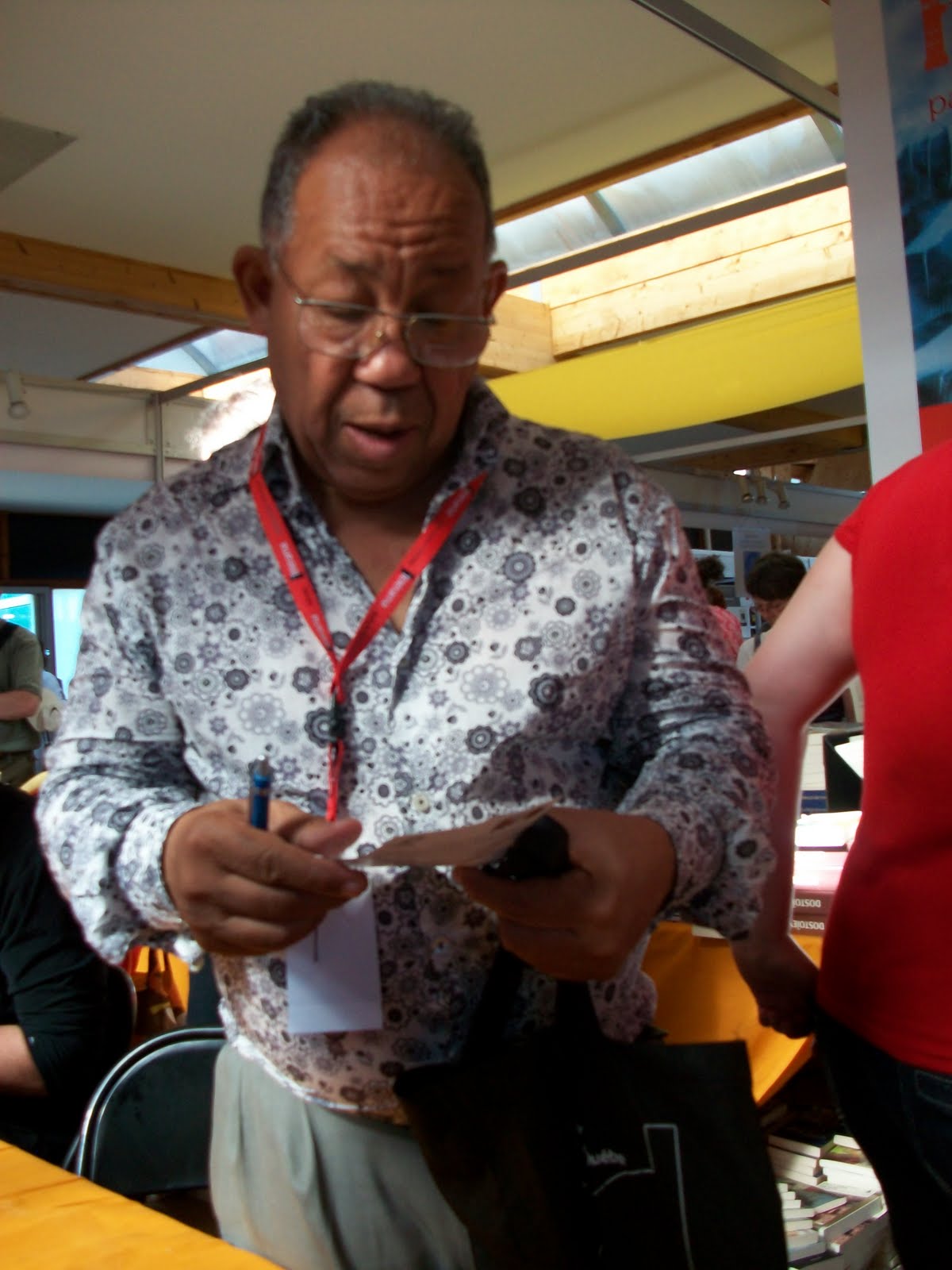
La présence haïtienne a été très appréciée. La plupart des ouvrages haïtiens exposés sur les stands des libraires et éditeurs ont été achetés. Les auteurs haïtiens ont été assaillis de toute part par les participants qui voulaient une signature.
Lors d’une conférence-bilan, le directeur du festival Etonnants Voyageurs a annoncé la tenue en janvier 2011 de la 2e édition de ce grand événement en Haïti. L’édition 2010 qui devait commencer le 14 janvier 2010 a été annulée suite à la catastrophe ayant frappé le pays le 12 janvier dernier. En attendant, le festival se déroulera en novembre prochain, à Bamako, au Mali. Cette deuxième édition malienne s’inscrira dans le cadre du 50e anniversaire des indépendances africaines. Michel le Bris projette déjà de consacrer, l’année prochaine, la 22e édition des Etonnants Voyageurs aux mers du sud, à ses explorateurs et aux marins, soit les littératures de l'Australie, la Nouvelle-Zélande.
-Chénald Augustin
lundi 17 mai 2010
Flag for a Day


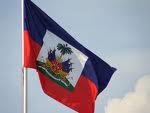
When my friend Nancy first learned that I was born on May 18th she got so excited, telling me that I was so incredibly lucky to be born on that day, and that she was envious of my birthday. She could not imagine a better date to be born than 18 mai, the birthday of the Haitian flag. I agreed with her. Of course, the fact that I was born via c-section means that my parents got to choose my birthday, and given the importance that 18 mai occupies in Haitian culture, it is not surprising that my parents chose this date in particular. Later on, they would refer to 18 mai as a measure of my love for the country of their birth, as though my abiding interest in, curiosity about, and passion for all things Haitian were the result of a birthday prophecy fulfillment.
In my family, discussions of Flag Day are often emotionally charged and laced with requisite embellishment. My grandmother recounts with razor sharp precision her schoolgirl memories of being divided into lines, boys on one side, girls on the other to participate in nationwide Flag Day ceremonies. According to her, Jacmel, where she was born and raised brought particular beauty and flair to those celebrations. The vigor with which my father re-enacts Jean-Jacques Dessalines ripping the white out of the flag, complete with teeth clenched and arms thrusting gave me chills as a child. Perhaps because of my birthday, I always feel an overprotective personal ownership over Flag Day that is admittedly irrational at times. Of course, Nancy’s elation is a reminder that I am by no means alone in my fierce flag love. In the diaspora the flag has become the quintessential symbol of pride and solidarity. Wyclef Jean was one of the first to popularize flag wearing in the US when he sauntered onto the stage of the 1995 MTV awards draped in the flag. Since then Haitian flag imagery has become a staple of his performances. Once while I was in Haiti my cousins were noticeably amused by my obsession with the Haitian flag, which to them was another marker of my jaspora quirks...
May also marks Haitian Awareness Month in the US, encompassing dates such as the birth of Toussaint Louverture and the Haitian celebration of Mother’s Day. At major Flag Day events in Boston, New Jersey, Brooklyn and Miami, people gather to celebrate with dance, music, speeches and parades. Reflecting back with friends today we remember being those little kids, dressed in blue and red or draped with flag sashes dancing to the beats of the tanbou. These stories are not ours alone. They are the stories of our gran moun like Ma Tante Yolande, an elder who has lived in Boston for years and though she celebrated the parade with zeal, she remains bothered by flag wearing. The flag is sacred, she would say, it was not intended to be a headscarf or a piece of clothing. They are the stories of our children who will learn the words of La Dessalinienne along with the Star Spangled Banner. One of the greatest symbols of our national identity, an icon of our history, celebration of the Haitian Flag Day embodies Haitian history and Haitian stories. The iconography and the symbolism bear cultural and imagistic significance that began in 1803 and continues today through these stories.
In the post-earthquake Haiti fever that spread all over the internet, suddenly Haitian flags popped up everywhere, in people’s Facebook profile pictures, on Twitter, CNN and Google. New pictures were being formulated and old ones re-circulated. Suddenly the Haitian flag seemed to be everywhere in the US: on the television, in the news, on billboards. The flag appeared in places where I would least expect it. There was the Dancing With the Stars Haiti tribute featuring Haitian dancers Martin Barthold and Emmanuel Pierre-Antoine to honor victims of the earthquake. In the performance, which aired during the premiere of DWTS tenth season Sopin and Pierre-Antoine shared their own stories of loss from earthquake and reflected on the importance of dance in Haitian culture before dancing on a flag draped stage. Moments like the DWTS special were far more poignant than some of the fleeting flag mentions evident in the small Haitian flag icons suddenly everywhere including Starbucks, or the quick references on popular television shows (I found it fascinating that on both Gossip Girl and Brothers and Sisters, for example, main characters discussed how their romantic relationships would be impacted by the sudden opportunity to work in Haiti for long term internships).
While I was touched by the show of solidarity conveyed in many of these public manifestations, the more I thought about it I became increasingly uncomfortable with some of the implications. I was left with a nagging feeling of loss, sucked into a dangerous and reductive game of identity politics. Did the flag mean as much to these people now posting on their profiles as it did to me? Would the flag soon be discarded, forgotten as soon as the nonstop coverage ceased? Did people know or care about the history and meaning behind the flag? Did they even understand Dessalines’ historic ripping out of the white symbolizing the end of French dominion? Had they heard of Catherine Flon, the woman who subsequently sewed the flag together rumored to have used strands of her own hair to do so? Did they know that the original flag colors were vertical lines of black and red symbolizing the black skin of the former slaves and the red blood they shed? Did any of these details even matter to the new Haitian flag bearers? Was I over-analyzing this contemporary usage of the Haitian flag? Was I being too critical when I should have been more appreciative?
It seemed as though the rich and colorful history that had inspired me as a child, motivated me as a scholar, and imbued me with so much pride was somehow getting dulled in the new flag frenzy. The details of what took place at Arcahaie when the flag was made have been eclipsed over time by the emergence of flag iconography. Suddenly this flag, the bicolor, which I had used to adorn the walls of my dorm room, home and office made its way to the halls of my university and to the profiles of my friends and colleagues. Suddenly my own flag furor was thrown into question. Did I properly reverence the flag as Ma Tante Yolande had instructed? Was I holding onto the flag too tightly? For the first time, the flag was emptied of its larger significance. It became a new, sentimental way to exhibit emotions that were too unwieldy to capture through a symbol.
This year more than ever it has become automatic and almost rote to plaster the Haitian flag all over the place without critically engaging the country or the culture behind it. How real is our relationship to the flag? Does my relationship end or begin with Flag Day? I have had to ask myself hard questions about what it means to have Haitian pride as I attempt to negotiate pride and symbolism with action and respect. Because no matter how much I love Haiti May 18th is and will always be about so much more than my birthday. So much more that I do, and do not understand, so much more that I have to learn and hope to teach.
Today, like every year on May 18th Haitians everywhere, in Haiti and abroad celebrate the creation of our flag. These celebrations are also informed by the tragedy that began the year of 2010. But the celebration reminds us, as Nadève’s post last week was entitled, that we are here. Nou la! After the coverage has waned, after the flags have disappeared, after the tributes have ceased we are still here. Nou la! Our flag is ours, our celebration, our symbol, our history is ours as well as ours to share. We need to make sure that we understand and honor its meaning in the sacred way it deserves.
RMJC
mercredi 12 mai 2010
Nou la – Or how not to package Haitian culture
On May 9th, a friend and I went to Le Villate in Pétionville to attend Nou la, a concert to benefit The Haitian Red Cross. I meant to bring my camera, but forgot it. I’m still developing my blogger reflexes!
It felt a bit strange to go out on the town. I remember the first time I went to a restaurant after the earthquake. It was mid February and I was surprised at the number of other patrons there. I guess I expected everyone to be camping out outdoors somewhere waiting for the next aftershock.
But the nightlife here has been stirring from its slumber for a while. The smaller bars and clubs reopened their doors months ago. Recently, there have been performances by RAM, Djakout and Kreyòl La.
I didn’t attend any of those shows. I felt most comfortable reentering the night scene with a benefit concert. I especially appreciated the fact that 80% of the proceeds were slated to go to the Haitian Red Cross. There have been massive donations to the International Red Cross, but actually very little of it has made its way to the Haitian branch. Unfortunately, I don’t think it made much money from this event, as not too many people showed up. I’m sure the rain had a lot to do with that. The Minister of Culture, Marie-Laurence Jocelyn Lassègue was in attendance, as was the actress Gessica Généus.
As my friend and I set out for Pétionville from Delmas, it started to rain heavily. We wondered whether the concert would even happen, but since it was an indoor venue, we decided to take our chances. When we got to Le Villate at a little after 5pm, the woman who greeted us asked us if we were there to perform. We were a bit taken aback and wondered aloud whether the artists had even arrived. She assured us that they had.
Well, about an hour later, we were invited into the performance area where we waited some more. We also watched several artists filing in. When the show finally got underway, the MC started off by apologizing for the delay and blaming it on the rain.
The concert began with a rendition of the National Anthem, a choice that can only be applauded. I cannot tell you who performed it, however, because his name was never given. There was no program distributed and the performers’ names were rarely announced. When they were, it was by whichever artist followed them on stage. Several well-known artists performed, such as Beken, Renette Désir, Stanley Georges and Mystic 703. But some of the lesser known artists were quite good and it’s a pity that they weren’t properly introduced. For example, there was a comic act that got a lot of laughs from the audience, but I have no idea who they were.
Nou la. A fitting title, for although many Haitians were lost in the earthquake, the majority of us are still here. Nou la, but now what? How does Haitian culture move forward after January 12th 2010? From the very first days after the earthquake, people insisted upon the importance of Haitian culture as a source of pride and richness. And I certainly don’t disagree. But I think so much more can be done to promote and showcase that culture.
The May 9th event was an opportunity to celebrate life, Haitian culture and the Haitian spirit. That came across well. It just seems a shame that more wasn’t done to showcase the talent present. I was first intrigued by the poster announcing the event. A drum, guitar and other instruments on a pile of rubble. The simple yet powerful words: Nou la. The commercials on TV grabbed my attention as well. Artists alone or in groups in front of a black background saying that we won’t forget what happened, we can’t forget those who are gone, but we are here. I would have liked to see some of the attention to detail demonstrated in the ad campaign on the night of the actual show.
Although the focus was on music, with both traditional songs and original compositions represented, other talent was on display as well. There were several paintings mounted on and surrounding the stage area representing a female Haiti rising. (Of course, I have no idea who signed them as it was never stated; the paintings were never even mentioned by the MC.) Several singers stated that many of the outfits worn by the performers were created by Haitian designer Phélicia Dell. A few skits and declamations were included in the performance.
My goal here is not to simply criticize this one event. I enjoyed the show. The idea for a Haitian benefit concert to benefit the Haitian Red Cross is a wonderful one. I just think that beyond stating how rich and vibrant our culture is, it’s time to start treating it as such. Packaging says a lot about how we feel about the content. If we really value Haitian culture, the way we choose to frame it must reflect that. The Nou la benefit concert did not do a good job of framing the artists who participated.
I have no memento of this event. No picture (my fault for forgetting the camera!), no ticket stub and no program. There were about twenty sponsors listed, among them Voilà and FOKAL, so I’d think programs would have been a possibility. Perhaps a cd will be forthcoming. One can always hope.
NM
It felt a bit strange to go out on the town. I remember the first time I went to a restaurant after the earthquake. It was mid February and I was surprised at the number of other patrons there. I guess I expected everyone to be camping out outdoors somewhere waiting for the next aftershock.
But the nightlife here has been stirring from its slumber for a while. The smaller bars and clubs reopened their doors months ago. Recently, there have been performances by RAM, Djakout and Kreyòl La.
I didn’t attend any of those shows. I felt most comfortable reentering the night scene with a benefit concert. I especially appreciated the fact that 80% of the proceeds were slated to go to the Haitian Red Cross. There have been massive donations to the International Red Cross, but actually very little of it has made its way to the Haitian branch. Unfortunately, I don’t think it made much money from this event, as not too many people showed up. I’m sure the rain had a lot to do with that. The Minister of Culture, Marie-Laurence Jocelyn Lassègue was in attendance, as was the actress Gessica Généus.
As my friend and I set out for Pétionville from Delmas, it started to rain heavily. We wondered whether the concert would even happen, but since it was an indoor venue, we decided to take our chances. When we got to Le Villate at a little after 5pm, the woman who greeted us asked us if we were there to perform. We were a bit taken aback and wondered aloud whether the artists had even arrived. She assured us that they had.
Well, about an hour later, we were invited into the performance area where we waited some more. We also watched several artists filing in. When the show finally got underway, the MC started off by apologizing for the delay and blaming it on the rain.
The concert began with a rendition of the National Anthem, a choice that can only be applauded. I cannot tell you who performed it, however, because his name was never given. There was no program distributed and the performers’ names were rarely announced. When they were, it was by whichever artist followed them on stage. Several well-known artists performed, such as Beken, Renette Désir, Stanley Georges and Mystic 703. But some of the lesser known artists were quite good and it’s a pity that they weren’t properly introduced. For example, there was a comic act that got a lot of laughs from the audience, but I have no idea who they were.
Nou la. A fitting title, for although many Haitians were lost in the earthquake, the majority of us are still here. Nou la, but now what? How does Haitian culture move forward after January 12th 2010? From the very first days after the earthquake, people insisted upon the importance of Haitian culture as a source of pride and richness. And I certainly don’t disagree. But I think so much more can be done to promote and showcase that culture.
The May 9th event was an opportunity to celebrate life, Haitian culture and the Haitian spirit. That came across well. It just seems a shame that more wasn’t done to showcase the talent present. I was first intrigued by the poster announcing the event. A drum, guitar and other instruments on a pile of rubble. The simple yet powerful words: Nou la. The commercials on TV grabbed my attention as well. Artists alone or in groups in front of a black background saying that we won’t forget what happened, we can’t forget those who are gone, but we are here. I would have liked to see some of the attention to detail demonstrated in the ad campaign on the night of the actual show.
Although the focus was on music, with both traditional songs and original compositions represented, other talent was on display as well. There were several paintings mounted on and surrounding the stage area representing a female Haiti rising. (Of course, I have no idea who signed them as it was never stated; the paintings were never even mentioned by the MC.) Several singers stated that many of the outfits worn by the performers were created by Haitian designer Phélicia Dell. A few skits and declamations were included in the performance.
My goal here is not to simply criticize this one event. I enjoyed the show. The idea for a Haitian benefit concert to benefit the Haitian Red Cross is a wonderful one. I just think that beyond stating how rich and vibrant our culture is, it’s time to start treating it as such. Packaging says a lot about how we feel about the content. If we really value Haitian culture, the way we choose to frame it must reflect that. The Nou la benefit concert did not do a good job of framing the artists who participated.
I have no memento of this event. No picture (my fault for forgetting the camera!), no ticket stub and no program. There were about twenty sponsors listed, among them Voilà and FOKAL, so I’d think programs would have been a possibility. Perhaps a cd will be forthcoming. One can always hope.
NM
Inscription à :
Articles (Atom)