Affichage des articles dont le libellé est teaching. Afficher tous les articles

mercredi 28 août 2013

One Island, Two Countries, One Class: Haiti and the DR

I have been under the radar and not posting much this summer as I complete the final edits of my book, Conflict Bodies: The Politics of Rape Representation in the Francophone Imaginary (Ohio University Press, 2014). With a few deadlines behind me and the beginning of the semester a week away I am now preparing for fall classes. 

This year I will be teaching two new courses, “'How to Read and Write About Africa:' Comparative African Literatures," and “Beyond the Border: Haiti and the Dominican Republic.” Each of these classes provide me with an opportunity to focus on the importance of  using a comparative approach to think about Haiti through literary and cultural studies. I am excited to be reading excellent literature and pursuing new themes with my students. 

http://historysshadow.wordpress.com
For the Haiti/DR class I am using novels as my point of departure for a discussion of the historic, political and cultural disjunctures and similarities between the two countries. Of course we will explore the historic tensions from the Haitian presence in DR after the Revolution, to virulent anti-haitianismo policies, Dominican aid to Haiti in the aftermath of the earthquake and current events such as the recent conflict over importations. 

We are reading five novels: Nelly Rosario’s Song of the Water Saints (2002), Edwidge Danticat’s The Farming of Bones (1998), In the Time of the Butterflies (1994) by Julia Alvarez, René Philoctète’s Massacre River (1989) and Junot Diaz, The Brief Wondrous Life of Oscar Wao (2008). Since the Danticat, Alvarez and Philoctete books are each set during the 1937 massacre, we will spend a lot of time discussing this period. I plan to add some essays from The Butterfly’s Way to complement our reading of Diaz and have more points of comparison for what these literatures look like in the diaspora and in a contemporary context.
Haitians attempting to flee the DR in 1937
Culturaldiplomacy.org via NPR.org

Other scholars have done important interdisciplinary work on this topic as well. I will draw secondary readings from the scholarship of Michele Wucker, Why the Cocks Fight: Dominicans, Haitians and the Fight for Hispaniola, Eugenio Matibag's Haitian and Dominican Counterpoint, Myriam Chancy's From Sugar to Revolution: Women’s Visions of Haiti, Cuba and the Dominican Republic; Pedro L. San Miguel's The Imagined Island: History, Identity, and Utopia in Hispaniola (Latin America in Translation/En Traduccion/Em Traducao). The Tears of Hispaniola: Haitian and Dominican Cultural Memory by Lucía Suárez. I am also using a number of other articles such as Richard Lee Turits  “A World Destroyed, A Nation Imposed: The 1937 Haitian Massacre in the Dominican Republic” that will help to set some of the historical context for this time period. I wish I could have my students attend the Transnational Hispaniola Conference, the first part of which took place in 2012 and is being organized by Rutgers University, but perhaps instead we can get some of the proceedings from the conference.

The journal Meridians has a nice discussion between women writers entitled, Voices from Hispaniola: A Meridians Roundtable with Edwidge Danticat, Loida Maritza Perez, Myriam J. A. Chancy, Nelly Rosario, and Ginetta E. B. Candelario. I am especially thrilled that this year BC is fortunate to have two of these amazing women--Edwidge Danticat and Nelly Rosario--visit campus to give lectures during the academic year. 

I am really excited about embarking on this new teaching experience and look forward to letting you know how it goes this fall!


RMJC

mercredi 31 octobre 2012

Teaching Haiti

It's the last day of October! Generally, we like to produce about two blog posts per month. And suddenly I find myself with only a few hours left to write something. I don't know where the time went! Well, I do, actually. October is always a busy month for me as it's the start of our academic year, so I've been busy prepping classes. Also, Regine and I will both be at the 24th annual Haitian Studies Association conference in New York in a couple of weeks. There are so many fantastic panels and presentations lined up, I am sure I will be frustrated by everything I'll be forced to miss. In addition to the roundtable where we'll be talking about this here blog, I'll be presenting on my experience as a teacher in Haiti. That paper is currently a work in progress. I thought I'd give you all a preview. Feel free to weigh in and help me shape my paper!

The title of my talk is A Haitian Reflects on Teaching Haitian Literature in Haiti. My co-panelists, Kate Ramsey and Alyssa Sepinwall, will be talking about their experiences teaching about Haiti in other communities.

I was a double major in college: French and English. I love books--  love reading them, love talking about them. I just couldn't decide which literary tradition to specialize in. Then I spent a semester in Paris and took a course with Jacques Chevrier on Francophone African literature. When I returned to Baltimore, I did an independant study on Haitian literature. It became obvious that that was what I wanted to spend my time on: reading and studying Haitian literature. But at that time, I honestly had no idea where I'd be researching and teaching Haitian literature. 

Now that I've been teaching at the Ecole Normale Supérieure of Haiti's State University for about a decade while also participating in conferences and projects on Haitian literature elsewhere around the world, it is clear to me that context has a huge impact on what happens in the classroom, even if the content is ostensibly the same. 

So, here are a few particularities of teaching Haitian literature in Haiti that I plan to highlight in my talk. And I know some of them are pretty obvious:

  • There is no need for me to introduce or contextualize Haiti at the start of each semester. Big relief there!
  • I teach texts written in French as well as texts written in Creole. I'm not sure that'd be possible if I worked in a French department, but I'm housed in Modern Letters.
  • My students have usually heard of all of the authors I teach. They've met some of them and even had them as teachers. The books and authors are real to them in a way they might not be to other students. 

Of course, some  particularities are not positive ones:

  • The physical learning environment is pretty atrocious -- open classrooms with no doors, broken chairs and no sound insulation. In fact, the ENS is yet again involved in a campaign to get authorities to improve our working conditions.
  • I have to be creative in terms of syllabus building, since access to the library is often iffy and a lot of the books I'd like to teach are not affordable. We use a lot of photocopies.
  • Lack of diversity. We don't usually have the benefit of a wide range of perspectives in the classroom. We tend to come at the text from similar places, although my job as teacher is to help students consider other viewpoints. 

I hope these seem like good starting points for my paper. Any ideas on what I should add? What have been some of your experiences teaching or learning about Haiti?

NM

vendredi 12 octobre 2012

La rentrée: pour l'enseignement de l'esclavage


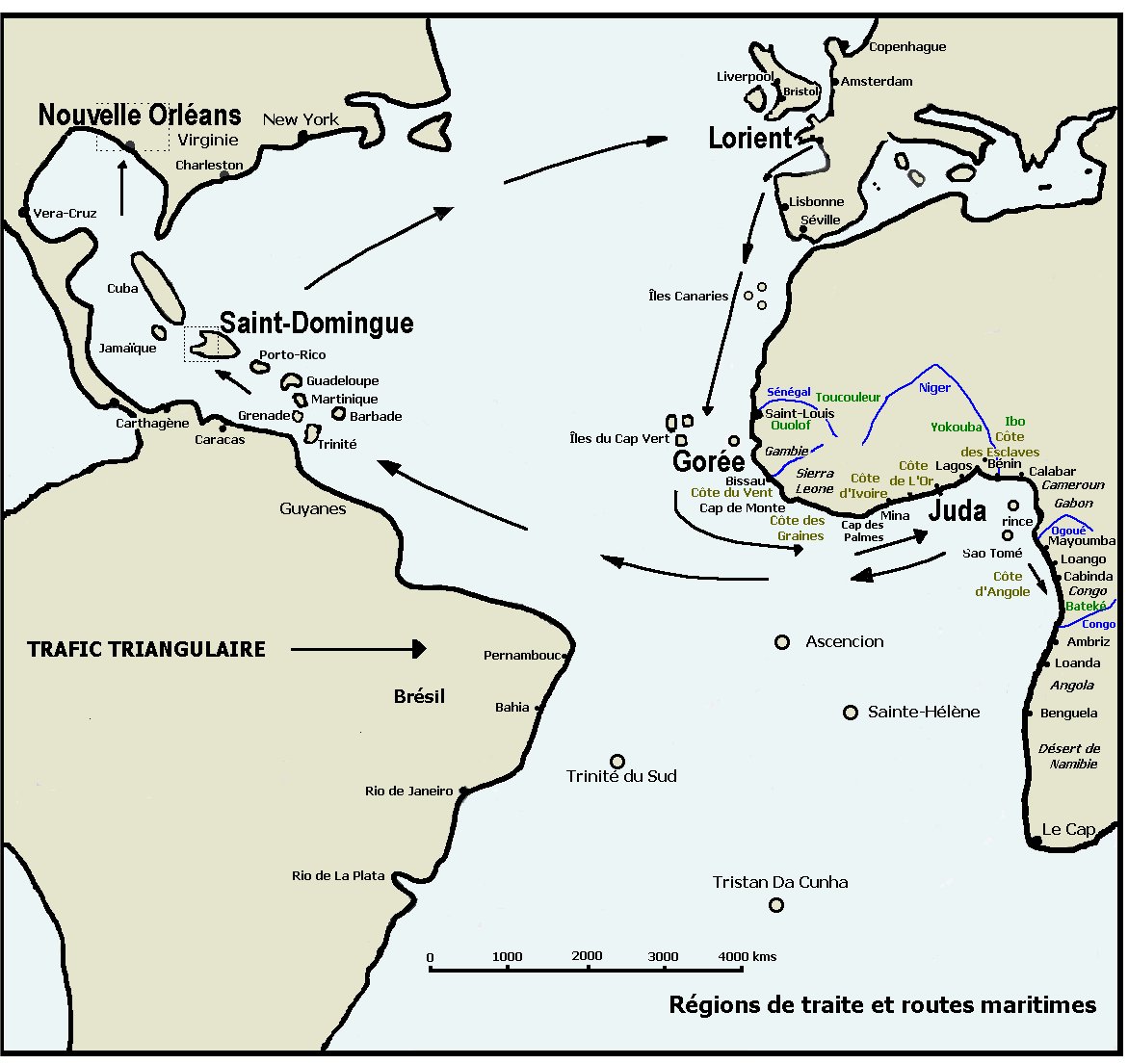
Le mois de septembre est terminé, mais je voudrais quand-même marquer la rentrée scolaire ici aux Etats-Unis...alors, permettez-moi de partager quelques points de réflexion sur le premier roman sur mon syllabus—Rosalie l’infâme de Evelyne Trouillot. Publié en 2003 ce roman se situe à Saint Domingue au 18e siècle. Plus spécifiquement, c'est l'année 1750--la période de l'esclavage.  Enseigner ce roman m'a donné l'occasion de réfléchir en profondeur sur les représentations de l'esclavage dans le contexte haïtien et comment enseigner l'esclavage dans un cours de littérature et culture francophone aux Etats-Unis. 

Evelyne Trouillot fait un travail méticuleux pour rendre la vie quotidienne de l’esclave.  Son objectif de montrer l’horreur de l’esclavage ainsi que l’humanité des esclaves individus se réalise avec des personnages pleins de leurs propres pensées et passions.  A mon avis la postface présente un des éléments les plus intéressants du roman. Trouillot y explique qu’elle « ne voulait pas écrire un roman historique », mais malgré ceci Rosalie l’infâme peut être considéré comme un roman historique ainsi que ce que les Américains nomment un « neo-slave narrative ».  Dans son étude  Sites of Slavery:  Citizenship and Racial Democracy in the Post-Civil Rights Imagination (2012) Salamishah Tillet explique que le neo-slave narrative est un genre avec lequel les écrivains et artistes noir-américains essayent de négocier leur identité et citoyenneté américaine au 20e et 21e siècles.  Devant cet état de choses, comment pourrait-on expliquer l’utilisation du « neo-slave narrative » dans le contexte haïtien, autrement dit, que veut dire la représentation de l’esclavage dans le contexte haïtien ?  Comment est-ce que l'histoire de l'esclavage figure dans notre imaginaire contemporain?  En utilisant le sujet du marronnage, Trouillot explore un aspect de cette histoire.  D'une certaine manière le "nèg mawon"  est synonyme de notre compréhension de l'esclavage parce que celui-ci représente la résistance et la liberté préfigurant la Révolution.  Mais Trouillot présente une autre vision qui féminise le personnage célèbre. Ainsi elle nous offre une histoire à la fois familière et complètement ré-imaginée. 

J'enseigne Rosalie dans le contexte d'un cours de littérature des femmes francophones, mais j’imagine un jour peut-être je pourrai créer un cours sur l’esclavage pour aller plus loin dans l’exploration du sujet.  Comment enseigner l’esclavage spécifiquement dans le contexte haïtien ?  Comment éviter la tentation de rester seulement dans la gloire de la Révolution haïtienne sans vraiment rentrer dans les détails horribles de cette institution tellement déshumanisante ?


Pour moi, en tant que prof de français aux Etats-Unis, enseigner l'esclavage aux étudiants qui ne sont pas familiers avec cette histoire particulière (dans le contexte haïtien et français)  a posé un défi supplémentaire.  Beaucoup d’étudiants américains ont lu Beloved de Toni Morrison et plusieurs étudiants français sont familiers avec Ourika de Mme Duras, mais pour ce qui concerne l’esclavage en Haïti et le rôle de la France dans la traite en général, il ont très peu de connaissance.  J'ai ajouté des lectures supplémentaires de  The French Atlantic Triangle : Literature and Culture of the Slave Trade (2008) écrit par Christopher Miller et The Libertine Colony écrit par Doris Garraway.  De même, le dernier livre de Laurent Dubois Haïti: The Aftershocks of History aborde la période avant la Révolution haïtienne. Ces livres m’ont aidé
 à contextualiser l’aspect historique.  Pour la prochaine fois je compte ajouter un film qui pourrait aider les étudiants à visualiser l’époque aussi.  Mes étudiants étaient   profondément touchés par le style de l’écriture, ils ont apprécié la beauté, l’émotion et la passion du roman.  En bref, ce roman leur a enseigné l'histoire de l'esclavage d'une manière plus intime. Ce succès est à cause de l’écriture de Trouillot et son but de rendre à la fois un roman historique et un texte qui humanise l’expérience quotidienne des esclaves. 

Et vous?  Comment est-ce que vous pensez que l'esclavage est présent ou absent dans notre imaginaire haïtien? Comment pourrait-on enseigner cette période avec plus de fidélité et complexité?


RMJC 

mardi 15 mai 2012

Haiti in the Kindergarten Classroom

Last week I taught a lesson about Haiti in my son's K0 class.  I had spoken with the teacher about coming in to do some kind of a French lesson, but as I planned and spoke with my son, it evolved into a lesson about culture.  Really, I suppose I have J.Perry to thank for this—the song Dekole is on the playlist we listen to daily in the car, and my son is soo into this song.  He sings at the top of his lungs “Haiti for life!”  and “Dekole ole ole ole…”  My favorite is the passion he brings to chanting “Pa pale m mal” during the second part of the song.  Anyway,  my son said he wanted to play this song and dance to it with his class when I come to school.  At this point a light bulb went off in my head and I decided to make the lesson one about Haiti.  There are actually a lot of Haitian and Haitian-American families at the school, and with May being Haitian Heritage Month here in Boston, I thought what better time to do so?  

Since my audience members would be a class of 3 to 5 years old children, I had to choose the content wisely.  My goals were to teach them things about Haiti that they could remember and relate to in ways that would be fun and interactive.  So I divided the lesson into three sections:  History, Language and Art.  

For the history part, I used the theme of the “Avengers” which is a hot pop culture topic in the US these days, what with the movie having just been released.  My son and his friends are in the superhero phase of life -- they spend a lot of time discussing which superheroes they want to be, what their attributes are, and who the strongest is. Of course I have to give credit to historian Laurent Dubois here because his book Avengers of the New World is a thorough look at the Haitian Revolution that I often use to teach in my classes. Using this idea, I    
   told them that over 200 years ago in Haiti there was a team of Avengers who fought for their freedom, but instead of having names like the Hulk, Iron Man and Captain America, they had names like Boukman, Makandal, Jean-Jacques Dessalines, and Toussaint Louverture.  (As some of you may know, my boys’  
names are Bediako Dessalines and Kwaku Toussaint and as soon as I said those names my son said “that’s me Mommy!  I was there?”).  I explained to them that these Avengers were fighting for freedom and what they did not only gave us the place we know as Haiti, but it changed the world forever.  I ended the section by showing them the Haitian flag and telling the famous story about its origins which they also loved.

The next section was on language.  I explained to them that Haiti has two official languages that are different from each other.  I taught them basic words and exchanges as well as a few basic commands in both Kreyòl and French.  The best part was getting them to stand up and sit down by saying “chita…kanpe…”  or “asseyez-vous…mettez-vous debout…”  They took turns being the leader on this to see who could remember the words in the right language. 

For the art forms I used visual art, crafts, music and dance. I began by showing them a painting of a market scene of women selling fruit with lots of bright colors.  I asked them questions about grocery shopping, then connected this to buying fruit at the market (I was careful to explain that there were regular grocery stores in addition to the market option). Then we talked about some of the different kinds of fruits you can get and each of them talked about what their favorite fruits were. I then brought out a few wooden crafts that I let them touch and look at.  I explained woodworking as a tradition that has been practiced for years and let them give the crafts as gifts to their teachers.  One of the crafts was a mug with the Haitian coat of arms so I tested them to see how many remembered the image from the flag.  My last object for this section was a tanbou which helped us to transition into the last part of the lesson on music and dance. They all went around and took turns beating on the drum, then we all got in a circle.  I showed them two dance moves, Kongo and Yanvalou (which I learned in graduate school by attending a few Haitian dance classes at the Dance Complex in Cambridge). We danced around the room trying these moves for a while and then finally we played Dekole and did some freestyle.  

That morning was the highlight of my week!  I especially enjoyed thinking about how to translate what I do to a small child.  It forced me to think creatively and less complexly to render the message about things I think about every day.  Of course, by far the best part was seeing my son sharing his knowledge with his friends--at different points he mentioned traveling there and eating Haitian food-- beaming with pride for his cultural heritage.

RMJC

vendredi 16 mars 2012

Enseigner la littérature haïtienne II


Enseigner la littérature haïtienne II


La semaine dernière j’ai eu l’occasion d’assister au cours de ma chère collègue et « co-blogger », Nadève, à l’Ecole Normale Supérieure de l’Université d'Etat d'Haïti.  C’était un vrai plaisir de voir les étudiants et d’observer Nadève en tant que prof.  C'était aussi une bonne occasion de réfléchir au sujet de l'enseignement de la littérature haïtienne dans un contexte différent.  De même, j'étais contente de voir les divergences et les convergences entre nos styles d’enseignement ainsi qu'en ce qui concerne les étudiants.  

Comment est-ce que ce cours de littérature haïtienne ici en Haïti diffère d’un tel cours aux États-Unis?  Ce cours de première année a comme sujet la nouvelle haïtienne—son objectif est d’approfondir la connaissance du genre en général et de se focaliser sur le développement de la nouvelle haïtienne en particulier.  Une question que Nadève a lancée au début du cours m’a fait considérer une des grandes différences entre nos étudiants: « Pouvez-vous nommer quelques  nouvellistes haïtiens ? »  Ils ont nommé :  Yanick Lahens, « Maître » Marcelin, Gary Victor et d’autres encore.  Leur capacité d’identifier une telle variété d’écrivains m’a frappé surtout parce qu'évidemment cela n’est pas le cas dans mes propres cours aux Etats-Unis où la plupart des étudiants n'ont jamais lu d'autres écrivains haïtiens.  Voici peut-être la plus grande différence.  

Dans le contexte haïtien, pas question de lire les textes littéraires comme des études anthropologiques, c'est-a-dire, on peut vraiment rester dans la forme du texte.  De mon côté souvent les étudiants se perdent dans le fond sans vraiment délibérer au sujet de la forme.  Par exemple, quand on enseigne un roman canonique comme Gouverneurs de la Rosée il faut introduire la vie paysanne, le vaudou, la situation linguistique...  Quelquefois le désir d'approfondir la connaissance de l'aspect culturel mène à un manque d'attention aux détails littéraires.   

La question linguistique est un autre endroit où il y a des distinctions notables.  Pour mes étudiants l'utilisation du Kreyòl doit être expliquée, et si l'auteur ne le souligne pas (avec les italiques etc.) je suis chargée de définir et expliquer les expressions.  Mes étudiants ne sont pas toujours capables d’analyser ce choix linguistique ou celui de passer d'une langue à l'autre.  Alors que dans le cours à l'ENS la situation de diglossie se présente en pleine classe.  Ces observations sont surement évidentes, mais étant donné la diversité de nos lecteurs ici à Tande, c'est bien d'y penser, car nous venons chacun de notre propre contexte, même si la mondialisation de la littérature nous permet de lire ces auteurs et étudier la littérature et la culture haïtiennes partout dans le monde.  


En gros, j’étais impressionnée par les étudiants et le professeur (aucune surprise) !  J’ai surtout apprécié comment Nadève faisait référence à la littérature française pour contextualiser la nouvelle haïtienne et pour faire des comparaisons utiles.  C’est quelque chose que je ne fais pas assez souvent dans mes propres cours.  Peut-être cette différence existe parce que je suis très (trop ?) consciente du fait que mes étudiants suivront beaucoup d’autres cours de littérature française des différents siècles et que pour la plupart d'entre eux, la littérature francophone en général et la littérature haïtienne en particulière demeure ici une « littérature mineure »...

RMJC

samedi 31 décembre 2011

Men kontre, lyen kreye

Jodi a ane 2011 lan prale. Nan dènye semenn sa yo, gen anpil aktivite  ki montre enpòtans lyen Ayiti ak lòt peyi, lyen ayisyen ak lòt pèp. Nan sezon fèt la, nou vle soulinye lyen sa yo paske kilti ayisyen pat janm yon kilti ki te fèmen sou tèt li.

L.J. Janvier/ foto achiv CIDIHCA
A. Firmin/ foto achiv CIDIHCA
2011 te make san lane depi de kokenn chenn entelktyèl ayisyen mouri : Anténor Firmin ak Louis-Joseph Janvier. Si de pansè sa yo te travay anpil sou idantite ayisyen, sou kilti ak istwa peyi nou, yo te toujou pran anpil swen pou plase idantite ayisyen sa a nan yon kontèks ki pi laj toujou, pou montre plas Ayiti nan lemonn, jan sa kap fèt lòt kote gen yon enpak sou Ayiti epi kijan Ayiti kapab enfliyanse lòt peyi, lòt pèp.  Se domaj pat gen plis promosyon ki te fèt pou kòlòk ki te òganize sou Anténor Firmin nan Inivèsite Kiskeya pandan mwa desanm lan. Paske li enpòtan pou lide ni Anténor Firmin ni Louis-Joseph Janvier kontinye diskite nan sosyete pa nou epi nan espas entelektyèl an jeneral.

Nan mwa novanm ki sot pase a, Asosyasyon pou Etid Ayisyen te òganize 23zyèm kòlòk anyèl li nan vil Kingston nan peyi Jamayik. Anpil entevenan te pale sou lyen ki egziste ant Ayiti ak Jamayik – depi Boukmann rive nan fay ki travesè toulède peyi yo. Similarite ant de peyi yo pa rete nan nivo istorik oubyen jeyografik. Gen anpil similarite nan de sosyete yo jounen jodi a tou. Ekriven Velma Pollard te pale sou sitiyasyon lengwistik  jamayiken an ki sanble anpil ak sa k genyen Ayiti a. Si souvan pa bò isit nou kritike atitid anpil ayisyen – leta a tou – genyen parapò lang kreyòl la, entèvansyon Pollard la montre nou sitiyasyon pa nou miyò pase pa anpil lòt pèp. Fòk mwen sinyale tou, gen plizyè entèvansyon nan kòlòk la ki te fèt an kreyòl, pami yo, prezantasyon Jocelyne Trouillot-Lévy te fè sou sitiyasyon edikasyon siperyè ann Ayiti. Li enpòtan pou nou devlope lang kreyòl la nan tout kalite kontèks si nou vle li vin pi djanm: kreyòl ka pale nan kòlòk, li ka ekri sou blòg. 

Se pa lyen istorik sèlman ki egziste ant Ayiti ak lòt peyi. Gen lyen ki kontinye ap kreye jounen jodi a. Nou ka pran egzanp program Passagers du vent ki te lanse nan mwa avril 2011. Se yon rezidans ekriti ak kreyasyon atistik ki tabli nan vil Pòsali. Depi kèk tan, ekriven ak atis ayisyen patisipe nan anpil rezidans kreyasyon nan lòt peyi. Li te lè, li te tan, pou te gen yon aktivite konsa ann Ayiti, ki rekonèt nan peyi pa nou tou, atis yo kapab jwenn enspirasyon, epi sitou yon kote kalm pou yo kreye san twòp distraksyon.  Nou swete Passagers du vent, yon inisyativ James Noël ak Pascale Monnin ap kontinye pandan lontan. 

foto A.M.G. Ménard
Si Passagers du vent sanble premye program rezidans atistik nan peyi a, se pa premye aktivite literè ki fèt nan vil pwovens yo. Premye wikenn nan mwa desanm lan, plizyè ekriven te patisipe nan 27èm edisyon aktivite Livres en liberté nan vil Gonayiv. Se premye fwa aktivite sa a te dewoule nan vil endepandans lan. Daprè mwen, lòt edisyon aktivite a konn pi bèl, men deplasman ekriven plizyè gwo vil peyi a yo pou rankontre lektè yo pi pre lakay pa yo se toujou yon bon bagay.


Rankont ant otè ak lektè te fèt Pòtoprens tou. 21 desanm Livres Ouverts te òganize nan lakou Enstite Franse. Plizyè patisipan Passagers du Vent te la ansanm ak plizyè ekriven ayisyen ki gen liv ki fenk sòti oubyen ki gen yon zèv ki deja etabli. 23 desanm Dites-le avec un livre te fèt nan lakou Direksyon Nasyonal Liv la.   

Konsatou, aktivite tankou Artisanat en fête ak Femmes en production ankouraje pwodiksyon ak kreyativite lokal se vre. Men yo pèmèt tou lyen kreye ant moun ki rete nan diferan zòn peyi a. Depi plizyè mwa, chak wikenn, yon seri mèt baton Latibonit vin ofri kou baton nan Sant Kiltirèl Anne-Marie Morisset nan Delma. Aktivite sa yo, se ranfòse yo ranfòse kilti nou paske yo fè plis moun nan peyi a konnen kisa kap fèt nan diferan zòn yo pou nou tout kapab apresye bèl bagay k ap fèt lakay nou. 

Si tout kreyasyon ak ranfòsman lyen gen aspè pozitif yo, genyen tou ki charye tansyon. Depi tranblemantè 12 janvye 2010 la, gen yon kominote ayisyen ki kòmanse ap tabli nan peyi Brezil. Si nou kapab imajine tout posibilite pou echanj ak kreyasyon sitiyasyon sa a kapab fasilite, kondisyon ayisyen yo ap viv an Brezil kounyè a difisil anpil. 

Tout koneksyon k ap fèt pa oblije enplike plizyè peyi ni yon aktivite fòmèl. Gen lyen ki kreye nan yon echèl ki pi piti ki enpòtan tou. Ni mwen ni Régine se pwofesè literati. Nou toulède anseye literati ayisyen, pafwa nou sèvi ak menm tèks. Konsa, ane sa a Régine ak etidyan li yo nan Boston College kòmanse sa nou swete ap tounen yon tradisyon. Nan fen semès la, li mande etidyan l yo si yo ta renmen voye liv yo fin sèvi yo ann Ayiti. Konsa, li sanble 20 liv pou biblioyotèk ak etidyan Lekòl Nòmal Siperyè ak lòt kote tankou Sant Kiltirèl Anne-Marie Morisset. Mwen ekri deja sou difikilte mwen konn rankontre nan chwa liv pou kou m yo. Mwen panse kolaborasyon sa a ap ede anpil. Pami liv nou resevwa nan echanj sa a gen klasik tankou Gouverneurs de la Rosée epi tèks pi resan tankou Bicentenaire ak Saisons Sauvages. 

Pandan ane 2011 lan ap fini epi 2012 ap rive sou nou, fòk nou tout reflechi sou lyen ki enpòtan pou nou chak, nan nivo pèsonèl ak nan nivo kominote nou tou. Si medya nasyonal ak entenasyonal fè anpil bwi ak yon seri pèsonalite vedèt ki vizite Ayiti semenn sa yo – Ne-Yo ak Oprah Winfrey, Robert De Niro ak Kim Kardashian – nou panse gen lòt lyen kap kreye ki kapab pi enpòtan pou nou, pou peyi nou, pou kilti nou. 

Nou swete tout lektè nou yo yon bèl ane 2012!
NM

mercredi 29 décembre 2010

Une année académique comme les autres…

En cette dernière semaine de l’année, je pense à l’année académique qui elle, vient tout juste de commencer. Avec tous les problèmes qu’a connu Haïti l’année dernière, ce n’est qu’en octobre que j’ai pu boucler mes cours de l’année académique 2009-2010. Donc, ce n’est qu’à la première semaine de décembre que j’ai commencé les cours de l’année 2010-2011. Et depuis, les cours ont été interrompus par des manifestations post-électorales et maintenant les vacances de fin d’année. Il y avait aussi une rareté d’essence sur le marché, mais j’ai pu quand même me rendre à l’ENS. Avec tout ça, on serait peut-être tenté de dire que cette année académique s’annonce comme particulièrement difficile, mais je me rends compte qu’en fait, chaque année vient avec son lot de problèmes et on fait avec. (On est bien obligé, comme je l’explique dans ce court texte.)


Je travaille avec les étudiants de première et deuxième années du département de Lettres Modernes. Dans nos nouvelles structures en bois, sans portes. Vous pouvez donc imaginer le bruit des tap-taps qui passent avec leur musique stridente, les klaxons des voitures, les gens qui crient. En plus, bien que la majorité des livres de l’ENS ait survécu au séisme, la bibliothèque de l’école n’est pas encore fonctionnelle, faute d’espace. Vous imaginez bien une faculté sans bibliothèque ? Un cours de littérature se faire sans que les étudiants aient libre accès aux livres? Et pourtant, en dépit de tout ça, on travaille. On fait comme on peut. Et ce n’est pas si mal. Le début d’une année académique charrie tant de possibilités, tant d’ouvertures sur le monde. Je me rends compte qu’en dépit de tout de ce qu’on a vécu cette année, et tout ce qui se profile à l’horizon, ceci n’a pas changé. Et c’est tant mieux.

Les deux cours que j’offre ce semestre sont :
Introduction à la littérature francophone de la Caraïbe. Dans ce cours, on lit des extraits de la Revue Indigène, Le Cahier d’un retour au pays natal, L’Éloge de la Créolité. On discute du réalisme merveilleux et du spiralisme et des auteurs comme Léon-Gontran Damas et Frankétienne.
La littérature haïtienne contemporaine. Cette année, j’ai pris l’enfance comme thème pour ce cours. Le choix de textes est toujours difficile car il y en a tellement d’intéressants et de pertinents. En plus, il faut choisir des livres disponibles dans la bibliothèque de l’ENS (ce qui n’est pas possible cette année !) ou que les étudiants peuvent se procurer pour pas trop cher, donc des textes publiés en Haïti en ce qui concerne les romans.  Malheureusement, étant donné que le semestre est écourté, on lira moins de textes. Quelques nouvelles : « Alawonnbadè » de Cynthia Bastien (2005), « Lucette » de Paulette Poujol-Oriol (1991) et « La Folie était venue avec la pluie » de Yanick Lahens (2006) et deux romans: L’Odeur du café de Dany Laferrière (1991) et  Le Mirador aux Etoiles d’Evelyne Trouillot (2007).

J’ai hâte de reprendre les conversations déjà entamées. En attendant, je vous souhaite à tous un 2011 bien meilleure que 2010. 


NM